
Have you ever wondered if the images you see online are genuine or manipulated? With the rise of AI manipulated images, it’s becoming increasingly difficult to distinguish between real and fake.
Deepfake nudes are a type of digital manipulation that uses artificial intelligence to create convincing, yet fake, images or videos that imitate a real person’s face or expressions. This technology has raised significant concerns about privacy, security, and the potential for misuse.
Key Takeaways
- Understanding what deepfake nudes are and how they are created.
- The technology behind AI manipulated images and their potential impact.
- How to identify and distinguish between real and manipulated images.
- The importance of being cautious when sharing or viewing online content.
- Steps to take to protect yourself from the potential misuse of digital manipulation.
What Are Deepfake Nudes?
Deepfake nudes represent a new frontier in synthetic media, raising concerns about their potential misuse. At their core, deepfake nudes are a form of explicit content created using advanced AI algorithms.
Deepfakes combine existing images, video, or audio of a person in AI-powered deep learning software to create a new, manipulated media product. This technology has evolved significantly, making it increasingly difficult to distinguish between real and fake content.
Definition and Basic Concept
Deepfake nudes are digitally manipulated images or videos that use AI to superimpose a person’s face or body onto another person’s, often creating explicit content without the subject’s consent. The basic concept revolves around using machine learning algorithms to learn and replicate the patterns of the original media, thereby creating a convincing forgery.
How They Differ from Traditional Photo Manipulation
Unlike traditional photo manipulation, which relies on manual editing techniques and software, deepfake creation leverages AI and machine learning. This results in highly realistic forgeries that are difficult to detect. The table below highlights key differences:
| Characteristics | Traditional Photo Manipulation | Deepfake Creation |
|---|---|---|
| Method | Manual editing using software like Photoshop | AI-powered deep learning algorithms |
| Realism | Limited by the editor’s skill | Highly realistic, often indistinguishable from real media |
| Speed | Time-consuming, dependent on complexity | Fast, once the model is trained |
The distinction between traditional manipulation and deepfakes lies in their sophistication and the technology used, making deepfakes a significant concern in the context of deepfake porn and other forms of synthetic media.
The Technology Behind Deepfake Nudes
The technology behind deepfake nudes involves complex processes, including generative adversarial networks (GANs), which are a cornerstone of artificial intelligence (AI) and machine learning (ML). GANs consist of two algorithms: generators and discriminators. The generator creates images, while the discriminator evaluates them, determining whether they are realistic or fake. Through this adversarial process, the generator improves, producing more convincing images over time.
AI and Machine Learning Foundations
At the heart of deepfake technology are AI and ML, which enable the creation of highly realistic manipulated images. Generative Adversarial Networks (GANs) are pivotal in this process. GANs work by pitting two neural networks against each other: one generates fake images (generator), while the other assesses the generated images and tells the generator whether they are realistic or not (discriminator). This continuous feedback loop enhances the generator’s capabilities, resulting in highly sophisticated AI manipulated images.
Tools and Software Used for Creation
Several tools and software are used to create deepfake nudes, leveraging the power of GANs and other ML algorithms. Some of the most popular include:
- DeepFaceLab: An open-source tool that allows users to create deepfakes with relative ease.
- FakeApp: A user-friendly application that simplifies the process of creating deepfakes.
- Other software and scripts available online, which often utilize cloud computing resources for processing.
The table below summarizes some key tools and their characteristics:
| Tool/Software | Ease of Use | Quality of Output |
|---|---|---|
| DeepFaceLab | Moderate | High |
| FakeApp | Easy | High |
As
“The sophistication of deepfake technology is both impressive and unsettling, raising significant concerns about the potential for misuse.”
The ease of access to these tools has contributed to the proliferation of deepfake nudes, making it a pressing issue in the realm of digital manipulation.
The Rising Prevalence of Deepfake Nudes
The growing prevalence of deepfake nudes is a complex issue that involves technological, social, and legal dimensions. As the technology becomes more advanced and accessible, deepfakes pose serious threats to personal privacy, public trust, and digital security.
Technological Advancements Making Creation Easier
The ease of creating deepfake nudes has increased significantly due to advancements in AI and machine learning. AI algorithms can now generate highly realistic images and videos with minimal input, making it easier for individuals to create and disseminate deepfakes.
Tools and software used for creating deepfakes are becoming more sophisticated and user-friendly, allowing more people to engage in their creation.
Statistics and Trends
The prevalence of deepfake nudes is on the rise, with a significant increase in reported cases over the past few years. According to recent statistics, the number of deepfake nudes has seen a substantial surge, highlighting the growing concern around this issue.
| Year | Number of Deepfake Nudes Reported | Percentage Increase |
|---|---|---|
| 2020 | 1,000 | – |
| 2021 | 2,500 | 150% |
| 2022 | 5,000 | 100% |
Common Targets of Deepfake Nudes
Individuals from all walks of life are being targeted by the malicious creation of deepfake nudes. The impact is widespread, affecting various groups and individuals in different ways.
Celebrities and Public Figures
Celebrities and public figures are often the primary targets for deepfake nudes. Their widespread recognition makes them ideal subjects for those looking to create and disseminate deepfake porn. The ease of accessing their images and videos online facilitates the creation of such content.
- High-profile celebrities are more likely to be targeted.
- Their images are readily available online.
- The creation of deepfake nudes can lead to significant reputational damage.
Private Individuals
Private individuals are also increasingly becoming victims of digital manipulation. Personal images and videos are being used to create fake nudes, often as a form of harassment or revenge.
- Private individuals may not have the same level of resources to combat deepfakes.
- The emotional impact on private individuals can be severe.
- Awareness and education are key to preventing such incidents.
Revenge Porn Connection
There’s a significant connection between deepfake nudes and revenge porn. Many deepfake nudes are created and shared as a form of revenge or to humiliate the victim. Understanding this connection is crucial to addressing the issue.
The creation and dissemination of deepfake nudes for revenge or other malicious purposes is a serious issue that requires immediate attention and action. Being aware of the risks and taking preventive measures can help protect individuals from becoming victims.
How to Identify Deepfake Nudes
Identifying deepfake nudes requires a keen eye for detail and an understanding of the telltale signs that distinguish them from real images. As AI manipulated images become more sophisticated, it’s crucial to stay vigilant and know what to look for.
Visual Clues and Inconsistencies
One of the primary ways to identify deepfake nudes is by looking for visual clues and inconsistencies. These can include unnatural eye movement, unnatural facial expressions, and awkward facial-feature positioning. Paying close attention to these details can help you spot a deepfake.
For instance, deepfakes often struggle to accurately replicate the complex details of human eyes. Look for eyes that seem too perfect, or ones that don’t quite match the rest of the facial expression.
Unnatural Lighting and Shadows
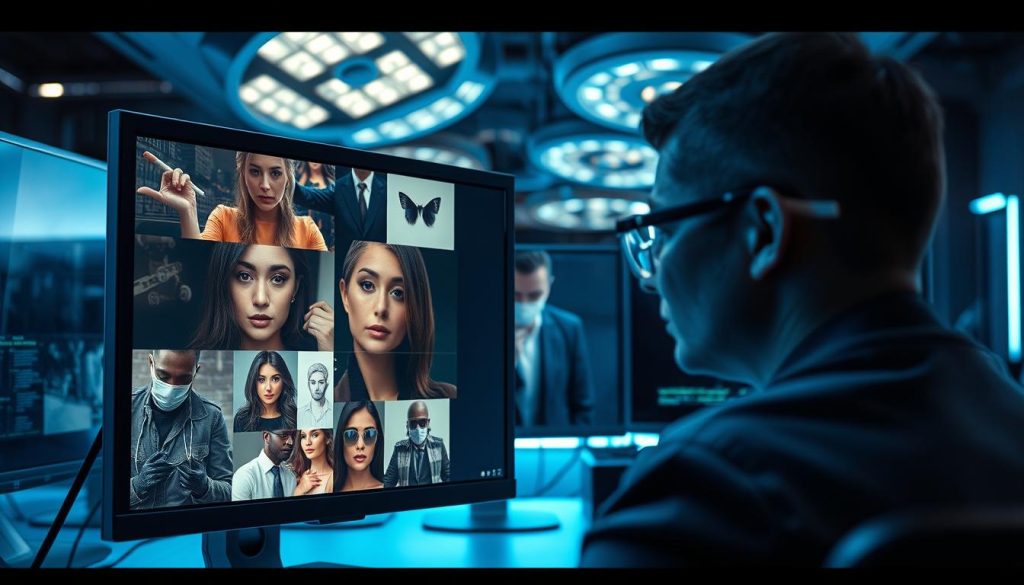
Another key indicator of deepfake nudes is unnatural lighting and shadows. Inconsistencies in lighting can make an image look suspicious. Check if the lighting on the subject’s face and body is consistent with the environment.
“The authenticity of an image can often be determined by examining the lighting and shadows. If they seem off or inconsistent, it could be a deepfake.”
Facial and Body Anomalies
Facial and body anomalies are also common in deepfake nudes. These can include distorted facial features, misaligned body parts, or unnatural poses. Being aware of these anomalies can help you identify a deepfake.
| Anomaly Type | Description |
|---|---|
| Distorted Facial Features | Features that don’t quite align or seem unnatural |
| Misaligned Body Parts | Body parts that seem out of place or incorrectly proportioned |
| Unnatural Poses | Poses that seem awkward or impossible in real life |
By being aware of these visual clues and inconsistencies, you can better identify deepfake nudes and avoid spreading explicit content that may be harmful or deceptive.
Technical Methods for Detecting Deepfake Nudes
As deepfake nudes continue to proliferate, the need for effective detection methods has never been more pressing. The technical community has responded by developing sophisticated tools to identify these synthetic images.
AI-Based Detection Tools
AI-based detection tools utilize machine learning algorithms to analyze images and videos for signs of digital manipulation. These tools are trained on vast datasets of both real and deepfake images, enabling them to learn the subtle differences between them. For instance, some AI models can detect inconsistencies in lighting, facial expressions, and other visual cues that may indicate a deepfake.
The effectiveness of AI-based detection tools lies in their ability to continuously learn and adapt to new deepfake techniques. However, their accuracy can be compromised if the training data is limited or biased. Moreover, the constant evolution of deepfake technology means that detection tools must also evolve to remain effective.
Metadata Analysis
Metadata analysis involves examining the metadata associated with an image or video file to determine its authenticity. Metadata can include information such as the device used to capture the image, the date and time of capture, and any editing software used. By analyzing this metadata, it is possible to identify potential inconsistencies that may indicate a deepfake.
For example, if the metadata of an image indicates that it was taken with a specific camera model but the image itself shows characteristics not typical of that camera, it could be a sign of manipulation. However, metadata can be easily tampered with or stripped from the file, which limits the reliability of this method.
| Detection Method | Effectiveness | Limitations |
|---|---|---|
| AI-Based Detection Tools | High accuracy in detecting known deepfake patterns | Requires extensive training data; vulnerable to new deepfake techniques |
| Metadata Analysis | Can reveal inconsistencies in file metadata | Metadata can be tampered with or removed |
In conclusion, both AI-based detection tools and metadata analysis are valuable technical methods for detecting deepfake nudes. While they have their limitations, they represent crucial steps in the ongoing effort to combat synthetic media.
Psychological Impact of Deepfake Nudes
The proliferation of deepfake nudes has significant psychological implications for both the victims and society at large. The creation and dissemination of such content can lead to severe emotional distress for those depicted, as well as broader societal concerns regarding the potential for disinformation and scams.
Effects on Victims
Victims of deepfake nudes often experience a range of negative emotions, including anxiety, depression, and a loss of control over their digital presence. The non-consensual nature of deepfake nudes can lead to feelings of violation and exploitation.
“The creation and distribution of deepfake nudes is a form of digital harassment that can have lasting impacts on a person’s mental health and well-being.”
The emotional toll can be compounded by the public nature of the internet, where such content can be easily shared and accessed by a wide audience.
| Psychological Impact | Effects on Victims |
|---|---|
| Anxiety and Depression | Emotional Distress, Loss of Control |
| Social Isolation | Damage to Reputation, Relationships |
Broader Social Implications
Beyond the individual victims, deepfake nudes have broader social implications, including the potential to spread disinformation and disrupt social trust. The ability to create convincing, fake explicit content can be used to impersonate public figures or conduct scams, further complicating the digital landscape.
As deceptive visuals become more sophisticated, the challenge of distinguishing reality from fabrication grows, posing significant societal challenges.
The issue underscores the need for a multifaceted approach to mitigate the effects of deepfake nudes, including education, technological solutions, and legal frameworks.
Legal Status of Deepfake Nudes in the United States
The legal landscape surrounding deepfake nudes in the U.S. is complex and multifaceted. As technology continues to evolve, lawmakers are faced with the challenge of creating legislation that effectively addresses the issue without infringing on freedom of expression.
Federal Laws and Regulations
At the federal level, there have been efforts to regulate deepfake nudes. The Take It Down Act is a significant piece of legislation that makes it a federal crime to publish nonconsensual sexually explicit images or videos, including deepfakes. This act represents a crucial step towards protecting individuals from the harmful effects of deepfake nudes.
Other federal initiatives focus on:
- Enhancing digital literacy to help individuals identify manipulated media
- Improving detection technologies through research and development
- Collaborating with social media platforms to establish clear policies on deepfake content
State-Specific Legislation
In addition to federal laws, various states have enacted their own legislation to combat deepfake nudes. For instance, California and Texas have implemented laws that allow victims to sue for damages resulting from the creation and distribution of deepfake nudes.
A list of states with notable legislation includes:
- California: Allows for civil lawsuits against creators and distributors
- Texas: Imposes criminal penalties for creating and distributing deepfake nudes
- Virginia: Has enacted laws to criminalize the creation and dissemination of deepfake nudes with malicious intent
As the issue of deepfake nudes continues to grow, it is likely that more states will introduce legislation to address the problem.
How to Protect Yourself from Becoming a Victim
To avoid becoming a victim of deepfake nudes, it’s vital to understand the risks and take preventive measures. Deepfakes are becoming increasingly sophisticated, making it challenging to distinguish between real and manipulated content. However, by adopting certain digital practices, you can significantly reduce your risk of being targeted.
Digital Privacy Practices
One of the most effective ways to protect yourself is by enhancing your digital privacy. This includes being cautious about the information you share online and using privacy settings on social media platforms to control who can see your content. It’s also crucial to use strong, unique passwords for your accounts and enable two-factor authentication whenever possible. By doing so, you make it harder for malicious actors to access your personal data and images, which can be used to create deceptive visuals.
Regularly reviewing and updating your privacy settings is also important, as social media platforms frequently update their policies. Being proactive about your digital footprint can help prevent your images from being misused in explicit content.
Limiting Your Online Image Presence
Limiting how many pictures and videos of yourself and your loved ones you share online can significantly reduce the risk of being targeted by creators of deepfake porn. Consider making your social media profiles private and avoid sharing sensitive or compromising photos, even with trusted individuals. Once an image is online, it can be difficult to control how it’s used or distributed.
By being mindful of your online presence and taking steps to secure your digital information, you can protect yourself from the potential harm caused by deepfakes. Staying informed about the latest trends and technologies in deepfake detection and prevention is also crucial in this ongoing effort.
What to Do If You Find Deepfake Nudes of Yourself
If you’ve found deepfake nudes of yourself, it’s essential to act quickly to minimize potential harm. Discovering such content can be distressing, but there are steps you can take to address the situation effectively.
Immediate Steps to Take
Upon finding deepfake nudes of yourself, the first step is to remain calm and not panic. It’s crucial to document the content, including the URL or platform where it’s hosted, as this information can be vital for taking down the content. Report the content to the platform’s moderators or administrators, as most social media and hosting platforms have policies against such material.
You should also consider securing your online presence by reviewing your privacy settings on social media and other online platforms. Ensure that your accounts are not publicly accessible and limit the amount of personal information available online.
Legal and Support Resources
If you’ve found deepfake nudes of yourself, seeking legal help is a crucial step. Consult with a lawyer who specializes in digital rights or cybercrime to understand your legal options. Legal action can include filing a complaint or pursuing the creators or distributors of the deepfake content.
Additionally, there are support resources available for victims of deepfake nudes. Organizations that focus on cyber harassment and digital privacy can offer guidance and support. Reaching out to these organizations can provide you with the help you need to navigate this challenging situation.

Social Media Platforms’ Response to Deepfake Nudes
The rise of deepfake nudes has prompted major social media platforms to reevaluate their policies and enforcement mechanisms. As synthetic media becomes more sophisticated, platforms are under increasing pressure to protect users from AI manipulated images and other forms of explicit content.
Platform Policies and Enforcement
Social media giants like Facebook and X (formerly Twitter) have implemented policies to ban the use of malicious deepfakes, including those that create non-consensual explicit content. These platforms are continually updating their guidelines to address the evolving nature of deepfake technology. Enforcement, however, remains a challenge due to the sheer volume of content uploaded daily.
To combat this, platforms are leveraging AI-based detection tools to identify and remove deepfake nudes. This proactive approach involves a combination of human moderators and automated systems to detect and address violations of their policies.
Reporting Mechanisms
Reporting mechanisms are crucial for users to flag suspicious content, including deepfake nudes. Most platforms provide an option to report content that violates their community standards. Once reported, the content is reviewed, and if found to be in violation, it is removed.
Users are encouraged to be vigilant and report any explicit content that they believe is a deepfake. This collaborative effort between users and platforms is essential in mitigating the spread of deepfake nudes.
By understanding and utilizing these reporting mechanisms, users can play a significant role in controlling the dissemination of deepfake nudes on social media platforms.
Ethical Considerations Surrounding Deepfake Nudes
Deepfake nudes raise significant ethical concerns that challenge our understanding of consent and digital rights. The creation and dissemination of these deceptive visuals involve complex issues that touch on personal autonomy, privacy, and media accountability.
Consent and Digital Rights
The production of deepfake nudes often occurs without the consent of the individuals depicted, violating their digital rights. This raises critical questions about the control individuals have over their own images and the need for stricter regulations to protect against such violations.
Moreover, the issue of consent is complicated by the ease with which deepfakes can be created and distributed online, making it difficult to track and remove unauthorized content.
Media Responsibility
Media platforms play a crucial role in the dissemination of deepfake nudes, and their responsibility in preventing the spread of such content is a topic of ongoing debate. Platforms must balance the need to protect users from harmful content with the principles of free speech and open communication.
The challenge lies in developing effective strategies to detect and remove fake nudes without infringing on individual rights or stifling online discourse.
Emerging Technologies to Combat Deepfake Nudes
The rise of deepfake nudes has prompted the development of innovative technologies to combat this issue. As the technology behind deepfakes continues to evolve, so too do the methods for detecting and preventing them. Two significant emerging technologies in this fight are digital watermarking and authentication, and blockchain-based verification.
Digital Watermarking and Authentication
Digital watermarking involves embedding a hidden signature or identifier into digital media, such as images or videos, to verify their authenticity. This technology can help detect if an image or video has been manipulated or if it’s a deepfake. Digital watermarking can be used to authenticate the source of the media, making it harder for malicious actors to spread deepfakes. Authentication technologies, on the other hand, use various algorithms to verify the integrity of digital media, ensuring that it hasn’t been tampered with.
Blockchain-Based Verification
Blockchain technology is being explored for its potential to verify the authenticity of digital media. By creating a blockchain-based registry of verified images and videos, it becomes possible to trace the origin and history of a piece of media. This can help in identifying deepfakes by checking if the media in question is registered on the blockchain as authentic. Blockchain’s decentralized and immutable nature makes it an attractive solution for verifying the authenticity of digital content.
The use of these emerging technologies represents a significant step forward in the fight against deepfake nudes. By leveraging digital watermarking, authentication, and blockchain-based verification, it’s possible to create a more secure digital environment where the spread of synthetic media is more easily detectable and preventable.
The Future of Deepfake Nudes and Detection Methods
The evolution of deepfake nudes is marked by a continuous technological arms race between those who create them and those who seek to detect them. This ongoing battle is reshaping the landscape of digital media, making it increasingly challenging to distinguish between authentic and manipulated content.
Technological Arms Race
The creation of deepfake nudes is becoming more sophisticated due to advancements in AI and machine learning. As detection methods improve, creators are driven to develop more convincing deceptive visuals. This cat-and-mouse game is expected to continue, with both sides pushing the boundaries of technology.
Potential Regulatory Solutions
To combat the proliferation of explicit content created without consent, regulatory bodies are exploring new legislation. Potential solutions include stricter laws on digital manipulation and the mandatory use of detection technology by social media platforms. Effective regulation will require collaboration between tech companies, lawmakers, and law enforcement agencies.
As the technological arms race continues, it’s crucial to develop and implement robust detection methods to protect individuals from the harmful effects of deepfake nudes.
Conclusion
Recognizing and defending against deepfakes is now a critical part of online safety. As we’ve explored, deepfake nudes represent a significant threat, leveraging AI manipulated images to create convincing, yet entirely fabricated, content. The technology behind these images is advancing rapidly, making it increasingly difficult to distinguish between what’s real and what’s a product of digital manipulation.
To protect yourself, it’s essential to be aware of the risks and take proactive steps. This includes being cautious about sharing personal images online, understanding the signs of deepfake nudes, and knowing how to report suspicious content. By staying informed and vigilant, you can significantly reduce your risk of becoming a victim.
The fight against deepfake nudes is ongoing, with technology and legislation evolving to counter this threat. As we move forward, it’s crucial that we continue to develop and utilize effective detection methods, while also promoting a culture of digital responsibility and respect for the privacy and rights of others.