
Can you trust what you see online? With the rise of artificial intelligence, a new threat has emerged: manipulated media that can hijack reality.
Imagine a single algorithm capable of cloning your face, stealing your voice, and manipulating your identity to deceive millions. This is the unsettling reality of deepfakes.
These AI-generated media are not just a novelty; they’re a weapon. As we navigate this new digital landscape, understanding the implications of deepfakes is crucial.
Key Takeaways
- Deepfakes are AI-generated media that can manipulate reality.
- They pose a significant threat to individual identity and trust online.
- The technology behind deepfakes is rapidly advancing.
- Understanding deepfakes is crucial for navigating the digital world.
- Awareness and education are key to mitigating the risks associated with deepfakes.
What is Mr. Deepfake?
Deepfakes, often personified by the term Mr. Deepfake, represent a cutting-edge application of machine learning in media manipulation. This technology has revolutionized the way we perceive and interact with digital media.
The term “deepfake” is derived from the words “deep learning” and “fake,” indicating the use of advanced AI algorithms to create synthetic media that can convincingly mimic real-life scenarios or individuals.
An Overview of Deepfake Technology
Deepfake technology utilizes neural networks to generate synthetic media. These networks are trained on vast datasets of images and videos, enabling them to learn patterns and characteristics that can be applied to create new, fabricated content.
The process involves complex algorithms that can map one person’s face onto another’s, creating a convincing illusion. This is achieved through a combination of machine learning techniques and sophisticated software.
How Mr. Deepfake Works
The creation of deepfakes involves several steps, starting with the collection of a large dataset of images or videos of the target individual. This dataset is then used to train a neural network, which learns to replicate the target’s facial expressions, movements, and other characteristics.
Once trained, the model can generate new content by superimposing the learned characteristics onto a different video or image, creating a convincing deepfake.
| Step | Description |
|---|---|
| 1. Data Collection | Gathering a large dataset of images or videos of the target. |
| 2. Training the Model | Using the collected data to train a neural network. |
| 3. Generating Content | Creating new content by applying the learned characteristics to a different video or image. |
Common Uses of Mr. Deepfake
Deepfakes have various applications, ranging from entertainment to misinformation. They can be used to create convincing special effects in movies, to generate personalized content in advertising, or even to create fake news stories.
However, the potential for misuse is significant, and there are growing concerns about the impact of deepfakes on society, particularly in terms of spreading misinformation and scams.
The Rise of Deepfake Videos
Deepfake technology has seen an unprecedented surge in recent years, captivating audiences worldwide. This rapid growth is attributed to advancements in digital manipulation techniques, making it increasingly difficult to distinguish between real and fabricated content.
The evolution of deepfakes is rooted in the development of sophisticated algorithms and the availability of large datasets. These technological advancements have enabled the creation of highly convincing deepfake videos.
Historical Context of Deepfake Development
The concept of deepfakes emerged around 2017, when the term was first coined. Initially, the technology was used for entertainment purposes, such as creating fake celebrity videos. However, it quickly gained notoriety for its potential misuse.
Since then, deepfake technology has continued to evolve, with significant improvements in video quality and realism. This has been driven by advancements in machine learning and artificial intelligence.
The Growing Popularity of Deepfake Content
The popularity of deepfake videos has grown exponentially, with many such videos circulating online. Social media platforms have played a significant role in their dissemination, often blurring the lines between reality and fiction.
As a result, deepfakes have become a significant aspect of digital media, influencing how we consume and interact with online content. Understanding the implications of this trend is crucial for both content creators and consumers.
The widespread availability of deepfake creation tools has democratized the production of such content, allowing more individuals to create and share deepfakes. This has contributed to their growing popularity and the diverse range of content available online.
The Impact of Mr. Deepfake on Media
As Mr. Deepfake continues to evolve, its impact on the media sector is becoming increasingly profound. The technology is not only changing how content is produced but also how it is consumed and perceived by the audience.
Transforming Traditional Media Production
Mr. Deepfake is revolutionizing traditional media production by offering new tools for video editing. The ability to create realistic, manipulated videos is opening up new creative possibilities for filmmakers and advertisers alike. However, this also raises concerns about the potential for misinformation and the need for stricter content verification processes.
Implications for Entertainment
The entertainment industry is both benefiting from and being challenged by Mr. Deepfake technology. On one hand, it allows for more sophisticated special effects and the potential to revive deceased actors or recreate historical events with unprecedented realism. On the other hand, it poses ethical implications regarding consent and the potential for misleading audiences.
Challenges for Journalism
Journalism faces significant challenges with the advent of Mr. Deepfake, particularly in verifying the authenticity of video evidence. The technology can be used to create convincing but false news footage, complicating the task of fact-checking and potentially eroding trust in media sources. Journalists and news organizations must develop robust methods to detect deepfakes and maintain the integrity of their reporting.
| Industry | Impact of Mr. Deepfake | Potential Solutions |
|---|---|---|
| Traditional Media Production | New video editing capabilities | Stricter content verification |
| Entertainment | Sophisticated special effects, ethical concerns | Clear disclosure of deepfake use |
| Journalism | Challenges in verifying video evidence | Robust deepfake detection methods |
In conclusion, Mr. Deepfake is transforming the media landscape, presenting both opportunities and challenges across different sectors. Addressing the ethical implications and developing strategies to mitigate potential negative impacts will be crucial for the industry’s future.
Ethical Considerations Surrounding Mr. Deepfake
As deep learning algorithms become more sophisticated, the ethical considerations surrounding Mr. Deepfake grow more complex. The technology’s ability to convincingly manipulate media raises significant concerns that touch on various aspects of society, from media consumption to the fabric of truth itself.
The Line Between Art and Deception
One of the most pressing ethical issues with Mr. Deepfake is distinguishing between artistic expression and deception. While the technology can be used to create stunning visual effects in movies or to enhance educational content, it also has the potential to deceive audiences by creating convincing but false narratives. The key challenge lies in ensuring that the use of deepfakes is transparent and clearly labeled, especially in contexts where the distinction between reality and fabrication is crucial.
Artistic Use Cases: Deepfakes can revolutionize the entertainment industry by allowing for more realistic special effects without the need for extensive reshoots or expensive CGI. However, this requires a clear understanding and agreement among creators, producers, and consumers about what constitutes a deepfake.
Consent and Representation Issues
The creation and dissemination of deepfakes also raise critical questions about consent and representation. When individuals are depicted in deepfakes without their consent, it can lead to serious privacy violations and potential harm to their reputation. Ensuring that the subjects of deepfakes have given their informed consent is a complex issue, particularly in scenarios where the individuals depicted are public figures or where the content is used in a context that could be misleading or damaging.
| Issue | Description | Potential Solution |
|---|---|---|
| Consent | Lack of consent from individuals depicted in deepfakes | Implementing strict consent protocols for deepfake creation |
| Representation | Misrepresentation or misinterpretation of individuals or events | Clear labeling of deepfakes and context provision |
| Misinformation | Spread of false information through convincing deepfakes | Developing and using deepfake detection tools |
Potential for Misinformation
The potential for deepfakes to spread misinformation is vast and poses a significant threat to public discourse and trust in media. As artificial intelligence continues to evolve, the ability to create convincing deepfakes that can deceive even the most discerning eye becomes more pronounced. This underscores the need for robust detection tools and a well-informed public that can critically assess the media they consume.
Addressing the ethical considerations surrounding Mr. Deepfake requires a multifaceted approach that involves technology developers, policymakers, and the public. By understanding the implications of deepfake technology and working together to establish guidelines and regulations, we can mitigate its risks while harnessing its potential benefits.
Legal Implications of Using Mr. Deepfake
As deepfakes become increasingly prevalent, the legal landscape surrounding their use is rapidly evolving. The complexity of deepfake technology, which leverages machine learning and synthetic media, poses significant challenges to existing legal frameworks.
Existing Laws and Guidelines
Currently, there is no single, comprehensive law that directly addresses deepfakes. However, various existing laws and guidelines are being applied to regulate their use. For instance, laws related to privacy, defamation, and intellectual property rights are being utilized to challenge the creation and dissemination of deepfakes.
In the United States, some states have begun to enact specific legislation targeting deepfakes, particularly those used in political campaigns or to manipulate individuals’ images. These laws aim to mitigate the potential harm caused by deepfakes, but their effectiveness and enforceability remain to be seen.
Challenges in Enforcement
Despite the existence of laws and guidelines, enforcing them against deepfakes poses significant challenges. One major issue is the difficulty in identifying and tracing the origin of deepfakes, as they can be created and shared anonymously online.
Furthermore, the rapidly evolving nature of deepfake technology means that legal frameworks must constantly adapt to keep pace. This creates a cat-and-mouse situation where lawmakers and regulators struggle to stay ahead of those creating and using deepfakes for malicious purposes.
Case Studies of Legal Actions
Several high-profile cases have highlighted the legal implications of deepfakes. For example, deepfakes used in political campaigns have raised concerns about election interference and the manipulation of public opinion.
In another instance, a deepfake video of a celebrity was used to spread misinformation, leading to legal action against the individuals responsible for its creation and dissemination. These cases underscore the need for effective legal mechanisms to address the challenges posed by deepfakes.
The Role of Technology in Deepfake Detection
As deepfakes become increasingly sophisticated, the need for advanced detection technology has never been more pressing. The development of deepfake detection tools is a rapidly evolving field, driven by the growing demand for authenticity in digital media.
Emerging Detection Tools
Several emerging detection tools are being developed to combat deepfakes. These include:
- AI-powered detection software that can analyze inconsistencies in video and audio.
- Digital watermarking techniques that help identify manipulated content.
- Forensic analysis tools that examine the digital footprint of media files.
These tools are crucial in the fight against deepfakes, enabling users to verify the authenticity of digital content.
Challenges in Identifying Deepfakes
Despite the advancements in detection technology, identifying deepfakes remains a significant challenge. Some of the key issues include:
- The rapid evolution of deepfake technology, making it difficult for detection tools to keep pace.
- The complexity of digital manipulation, which can result in highly convincing deepfakes.
- The limited availability of robust detection tools for widespread use.
Addressing these challenges is critical to improving the effectiveness of deepfake detection.
The Future of Detection Technology
The future of deepfake detection technology is likely to involve significant advancements in AI and machine learning. These advancements will enable detection tools to become more sophisticated, potentially staying ahead of deepfake technology. Some potential developments include:
- More accurate AI models that can detect subtle inconsistencies in deepfakes.
- Integration with social media platforms to automatically detect and flag deepfakes.
- Collaboration between tech companies to share knowledge and best practices in deepfake detection.
By staying at the forefront of detection technology, we can mitigate the risks associated with deepfakes and ensure a safer digital environment.
The Pros and Cons of Deepfake Technology
As deepfake technology continues to evolve, it’s crucial to understand both its potential benefits and drawbacks. Deepfakes have the capacity to revolutionize various industries, but they also pose significant risks that need to be managed.
Benefits in Creative Industries
Deepfake technology offers numerous benefits in creative industries, such as film, video production, and advertising. It enables the creation of realistic and engaging content without the need for extensive reshoots or expensive special effects. For instance, deepfakes can be used to revitalize historical footage or to create realistic dubbing in different languages, enhancing the viewer’s experience.
Moreover, deepfakes can facilitate innovative storytelling by allowing creators to experiment with different narratives and characters. This can lead to new forms of entertainment and artistic expression, pushing the boundaries of what is possible in media production.
Risks Involving Privacy and Trust
Despite its benefits, deepfake technology also raises significant concerns regarding privacy and trust. The ability to create convincing fake videos or audio recordings can be misused to spread misinformation or to impersonate individuals for malicious purposes. This can lead to erosion of trust in media and potentially harm individuals or organizations.
Furthermore, the misuse of deepfakes can have serious implications for personal privacy, as individuals may be targeted by deepfake content that is damaging or embarrassing. Therefore, it’s essential to develop strategies to mitigate these risks and protect individuals from the harmful effects of deepfakes.
The Balance Between Innovation and Safety
To fully harness the potential of deepfake technology, it’s crucial to strike a balance between innovation and safety. This involves developing and implementing effective regulations and detection technologies to prevent the misuse of deepfakes while still allowing for creative and beneficial applications.
By understanding the ethical implications of deepfake technology and leveraging deep learning algorithms responsibly, we can work towards a future where the benefits of deepfakes are realized while minimizing their risks. This requires ongoing collaboration between industry stakeholders, policymakers, and technology developers to ensure that deepfake technology is used in a way that is both innovative and safe.
Real-World Applications of Mr. Deepfake
With its advanced artificial intelligence and machine learning capabilities, Mr. Deepfake is transforming multiple industries by providing innovative solutions and enhancing existing processes.
Deepfake technology, as exemplified by Mr. Deepfake, has various real-world applications that are revolutionizing the way businesses and organizations operate. From creating engaging advertisements to enhancing video game experiences, the uses of Mr. Deepfake are diverse and continually expanding.
Advertising and Marketing Strategies
In the realm of advertising and marketing, Mr. Deepfake is being utilized to create highly personalized and engaging content. For instance, brands can use deepfakes to generate customized advertisements featuring celebrity endorsements or personalized messages, thereby increasing consumer engagement.
- Personalized advertisements tailored to individual preferences
- Enhanced brand storytelling through realistic deepfake videos
- Increased consumer interaction with immersive marketing campaigns
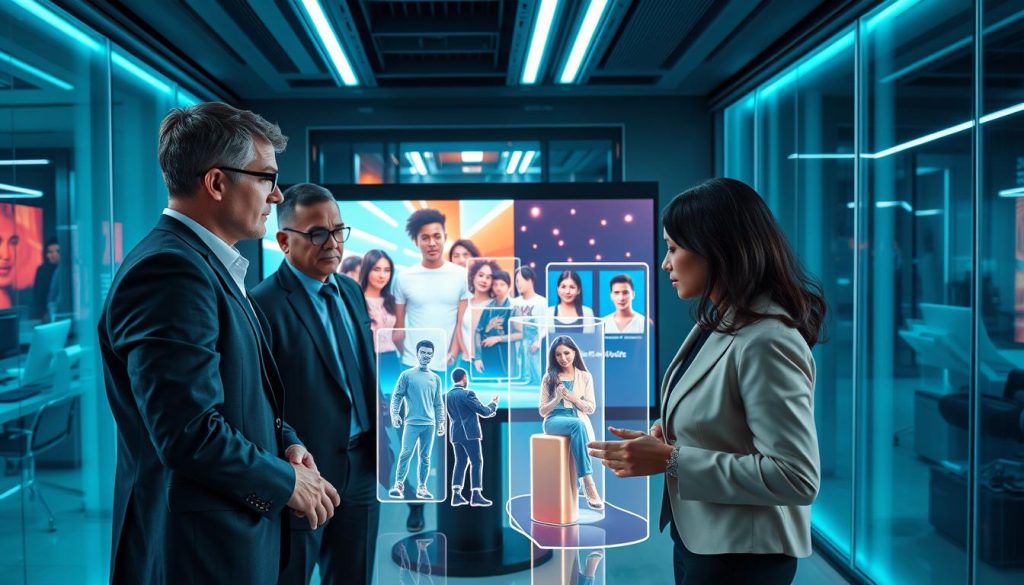
Uses in Video Games and Virtual Reality
The video game and virtual reality (VR) industries are also benefiting from Mr. Deepfake’s capabilities. By generating realistic character animations and interactions, Mr. Deepfake is enhancing the gaming experience and making VR environments more immersive.
- Realistic character animations that adapt to player behavior
- Enhanced VR experiences through lifelike interactions
- Streamlined content creation for game developers
Educational and Training Scenarios
In education and training, Mr. Deepfake is being used to create realistic training simulations and educational content. This includes generating historical reenactments or training videos that are more engaging and effective than traditional methods.
- Interactive training simulations for various professions
- Engaging educational content that enhances learning outcomes
- Personalized learning experiences through adaptive deepfake technology
As Mr. Deepfake continues to evolve, its applications are expected to expand into even more areas, providing innovative solutions and transforming industries.
Notable Deepfake Incidents
The growing prevalence of deepfakes has resulted in several high-profile cases that have raised important questions about digital manipulation and synthetic media. These incidents have not only captured the attention of the media and the public but have also sparked significant debates about the implications of this technology.
Celebrity Deepfakes and Their Reactions
Celebrity deepfakes have been among the most publicized incidents, with several high-profile cases involving actors and musicians. For instance, a deepfake video featuring a celebrity’s likeness was widely circulated on social media, sparking concerns about the potential for misuse. The reaction from the celebrity community has been mixed, with some calling for stricter regulations on the creation and distribution of deepfakes.
One notable example is the deepfake video of a famous actress, which was created without her consent. The incident highlighted the need for better safeguards against such misuse and led to a broader discussion on the ethics of deepfake technology. As digital manipulation becomes more sophisticated, the risk of similar incidents increases, making it crucial to address these concerns proactively.
“The deepfake phenomenon is a double-edged sword; while it offers new creative possibilities, it also poses significant risks to individuals and society.” – Media Expert
Political Deepfakes That Made Headlines
Political deepfakes have also made significant headlines, with several incidents involving world leaders and political figures. These deepfakes have raised concerns about the potential for influencing public opinion and interfering with political processes. For example, a deepfake audio clip of a political leader was circulated, sparking controversy and debate about its authenticity.
- A deepfake video of a world leader was used to manipulate public perception.
- Political campaigns have been accused of using deepfakes to discredit opponents.
- The use of deepfakes in political contexts has led to calls for stricter regulations.
Responses from Platforms and Social Media
Social media platforms have responded to the growing concern over deepfakes by implementing new policies and technologies to detect and remove such content. For instance, some platforms have introduced AI-powered tools to identify deepfakes, while others have updated their community guidelines to specifically address deepfake content.
Despite these efforts, challenges remain in effectively identifying and mitigating deepfakes. The cat-and-mouse game between those creating deepfakes and those trying to detect them continues, with synthetic media becoming increasingly sophisticated. As a result, ongoing collaboration between technology companies, policymakers, and the public is crucial to address the challenges posed by deepfakes.
The Future of Mr. Deepfake
The future of Mr. Deepfake is a complex tapestry woven from threads of technological advancement, user awareness, and regulatory frameworks. As this technology continues to evolve, it’s essential to consider the implications for video editing and the broader media landscape.
Predictions for Technology Development
Advancements in deepfake technology are expected to continue at a rapid pace, with significant improvements in the quality and realism of generated content. This will likely be driven by advancements in AI and machine learning algorithms, enabling more sophisticated video editing capabilities.
One potential development is the increased use of deepfakes in mainstream media, such as in movies and television shows, where they could be used to create more realistic special effects or to revive deceased actors. However, this also raises ethical implications regarding the potential for misuse.
Evolving User Awareness and Education
As deepfakes become more prevalent, it’s crucial that users are aware of their potential presence and understand how to identify them. This will require a concerted effort to educate the public about the risks and benefits associated with deepfake technology.
Media literacy programs could play a key role in this effort, teaching users how to critically evaluate the media they consume and identify potential deepfakes. By promoting a more informed and discerning public, we can mitigate some of the ethical implications associated with this technology.
Potential Regulations and Guidelines
The development of regulations and guidelines for the use of deepfake technology is an area of ongoing debate. As the technology continues to evolve, it’s likely that governments and regulatory bodies will need to adapt and respond to emerging challenges.
Potential regulations could include requirements for transparency regarding the use of deepfakes, as well as guidelines for their use in specific contexts, such as advertising or political messaging. By establishing clear rules and guidelines, we can help to ensure that deepfake technology is used responsibly and with consideration for its ethical implications.
How to Spot a Deepfake
In the age of artificial intelligence, spotting deepfakes has become a necessary skill. As technology advances, deepfakes are becoming increasingly sophisticated, making it challenging to distinguish between real and fake content.
Signs of Deepfake Videos
Identifying deepfakes requires a keen eye for detail. Some common signs include:
- Inconsistent lighting or shadows that don’t quite match the surroundings.
- Blurry or distorted areas around the face or mouth.
- Lip movements that don’t sync perfectly with the audio.
- Unnatural or stiff body language.
Tools for Verification
Several tools are available to help verify the authenticity of videos and images. These include:
| Tool | Description | Features |
|---|---|---|
| Deepware | Detects deepfakes using AI | High accuracy, fast processing |
| Truepic | Verifies image authenticity | Blockchain-based, secure |
| Sensity AI | Identifies deepfakes and manipulated media | Advanced AI algorithms, detailed reports |
Utilizing these tools can provide an additional layer of verification.
Community-Based Reporting
Community-based reporting plays a crucial role in identifying and flagging deepfakes. Platforms can empower users to report suspicious content, which is then reviewed and potentially removed if found to be a deepfake.
This collaborative approach helps in keeping the community safe from misinformation.
Engaging with Mr. Deepfake Responsibly
As we navigate the complex landscape of deepfakes, it’s crucial to understand the importance of engaging with this technology responsibly. The increasing prevalence of synthetic media, powered by advancements in machine learning, has significant implications for how we consume and interact with media.
Responsible Consumption of Media
Consuming media responsibly in the age of deepfakes means being discerning about the sources of the content we engage with. It’s essential to verify the authenticity of media, especially when it seems too good (or bad) to be true. Media literacy plays a crucial role here, enabling individuals to critically assess the media they consume.
Getting Involved in Advocacy
Advocacy is a powerful tool in promoting responsible use of deepfakes. By supporting initiatives that advocate for transparency and accountability in the creation and dissemination of synthetic media, individuals can contribute to a safer online environment. Advocacy efforts can also push for more robust regulations around deepfake technology.
Promoting Media Literacy
Promoting media literacy is key to combating the potential misuses of deepfakes. Educational programs that teach individuals how to identify and critically evaluate synthetic media are crucial. By enhancing media literacy, we can reduce the spread of misinformation and foster a more informed public discourse.
| Strategy | Description | Impact |
|---|---|---|
| Media Literacy Programs | Educational initiatives to teach critical evaluation of media | Reduces misinformation |
| Advocacy for Transparency | Supporting transparency in synthetic media creation | Promotes accountability |
| Responsible Consumption | Discerning consumption of media, verifying authenticity | Enhances critical thinking |
Conclusion: Understanding Mr. Deepfake
As we navigate the complexities of deepfake technology, it’s clear that digital manipulation is becoming increasingly sophisticated. The rise of Mr. Deepfake has transformed the landscape of video editing, presenting both opportunities and challenges.
Key Takeaways
The article has explored the intricacies of Mr. Deepfake, from its underlying technology to its far-reaching implications. We’ve examined the ethical considerations and legal frameworks surrounding deepfakes, highlighting the need for responsible engagement with this technology.
Staying Ahead of the Curve
To fully grasp the impact of deepfakes, it’s essential to stay informed about the latest developments in digital manipulation and video editing. As this technology continues to evolve, understanding its ethical implications will be crucial in mitigating potential risks.
Embracing Ethical Engagement
By promoting media literacy and advocating for responsible use, we can work together to ensure that deepfake technology is harnessed for the greater good. As we move forward, it’s vital to prioritize ethical considerations and address the challenges associated with digital manipulation.